Rare Cancer? You’re on your own kid!
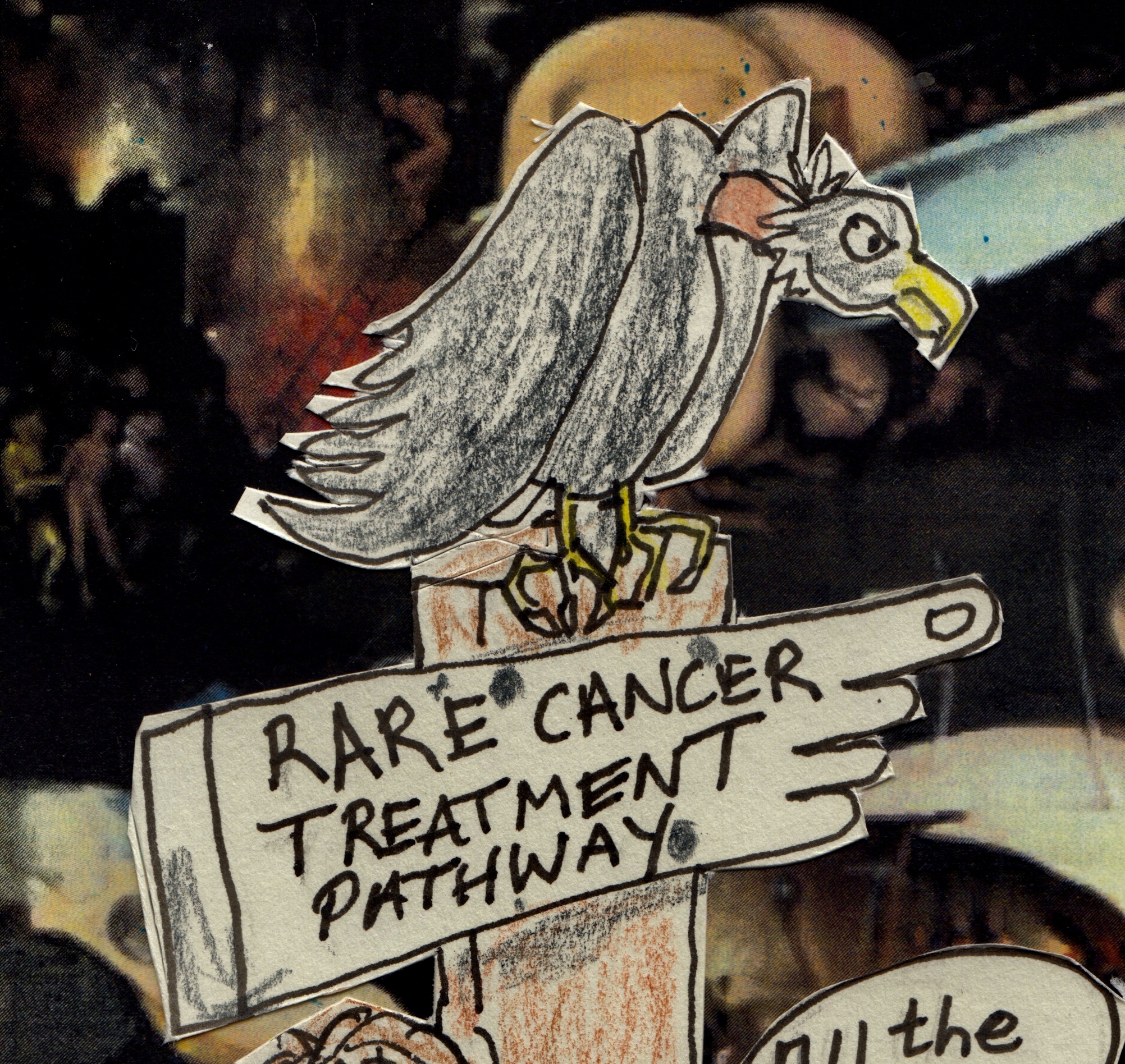
This blog is about how people with rare cancers seem to be left on their own by the NHS and leading cancer charities it is based on my personal experience.
As I said in my earlier blog – I have prostate cancer. Unfortunately for me its a rare and rather nasty kind – Ductal Adenocarcinoma. The little table below (via CHATGPT) illustrates this.
| Measure | Estimated UK Figure |
| Annual prostate cancer diagnoses (men) | ≈ 50,000–65,000 per year |
| Proportion of all male cancers | ≈ 25% (1 in 4 male cancers) |
| Proportion that are ductal adenocarcinoma (DAC) | ≈ 0.1%–0.8% of prostate cancers |
| Estimated DAC cases per year | ≈ 60–480 cases annually |
| Notes on DAC classification | Figures include uncertainty due to rarity and mixed acinar/ductal histology |
After radiotherapy what next?
I have now completed a set of 20 days Radiotherapy and frankly, have no idea whether or not this has made any impact on the cancer.
The Cancer Hospital who are caring for me have no staff who have treated someone with this form of cancer. They have told me that I will be monitored – quite how I am not sure. They have offered a baseline MRI and continued monitoring of my PSA. DAC has only got a fairly weak link to abnormal PSA. I remain on a testosterone blocker.
So, I thought I would get a second opinion!
My first step was to go to Prostate Cancer UK. They provide a telephone advice service staffed by specialist nurses. I had two questions:
First, what does good look like with regard to monitoring Ductal Adenoma post treatment.
The answer was – there is no evidence base with regard to DAC so we cannot give any advice re good practice.
Second, can they advise me of any hospitals in the UK who have expertise in this field.
The answer was – it is not our policy to recommend particular hospitals.
I am an assertive middle class, white, former academic. I worry that other patients who lack my confidence (arrogance!?) connections and experience will not be heard and worse may even just ‘disappear’. This issue is increasingly recognised nationally.
I suspect my experience is similar to those experienced by people with other rare cancers.
What PCUK should do.
- First, a twin track approach. For most people with Prostate Cancer an evidence based approach makes sense. For people with rare cancers PCUK needs to establish an experience based approach. This means meeting with relevant oncologists and pulling together experience based best practice and sharing this.
- Second, making sure that individuals with rare cancers are connected to key charities and to the NHS so that they are not lost and where appropriate are signposted to specialist oncologists who may be able to help.
Why does this happen?
Clearly the vast majority of prostate cancer cases have a certain uniformity, and therefore the evidence base is clearer. I also suspect that NHS hospitals are driven by performance targets that are driven by the majority – rare cancers have no effect on hitting the target or not!
A hopeful future?
While I continue to try to work out what to do; the Governments new Cancer Plan has been published (4th Feb 2026) this has a whole chapter focussing on rare cancers and identifies a range of actions that are consistent with what I am saying and go further. This will clearly take time to see through … a commodity that people in my situation have not got!
I think that it is very important that clinicians and stakeholder charities such as Prostate UK and Macmillan start to work with the spirit of this ambition.
As for me, my GP and I will probably use what knowledge we can scrape together (CHATGPT again!) and see if we can identify and then get a second opinion from a hospital in the UK which has some expertise in this field.
As for people who are not confident, lack IT skills, have little experience of influencing systems – I have no idea what will happen to them in the interim.
WHAT DO YOU THINK?
 Local Democracy and Health
Hi Mark
Not really a comment on your blog… but just best wishes to you suffering this horrible cancer. I hope the radiotherapy did do some good and I hope you find a useful second opinion.
Good to see you are still managing the art work.
Do look after yourself
Best wishes
Pete Sacker
Hi Pete – lovely to hear from you – la luta continua! All the best – Mark
Hi Mark Iâm sorry youâve been going through this. I hope that your attempts to find some more helpful information are bearing fruit. This is a personal response (which is why Iâm emailing not commenting directly on the blog). Iâm responding to the post because I had a similar and different experience. Similar in that when I had breast cancer â a very common experience for women, one in eight of us get it â I had a rare variant, metaplastic triple negative. It is not as rare as the one you have, estimates vary between 1% and 2% of all breast cancer being this type. It typically grows faster and has less good outcomes than the more common variants. So, like you, I wanted some information about how this might affect my treatment and my outcome. Despite there being reams of evidence about survival rates with cancer, I could not find any information that was tailored specifically to this type. My searches yielded just two studies â a large one in the USA and a small one in Greece. Both were a bit worrying, as the survival rates were markedly below those for the more common types. But it was also difficult to separate out the key factors. In the US, this variant is more common in Hispanic and Black women. Maybe other socio-economic factors influenced their lower survival? The Greek study was too small to be conclusive. And after a bit I stopped searching for certainty. I concluded that I was searching for a unicorn â there is no certainty about optimum treatment, likely effect on life expectancy or any of the other things I wanted to know. Thatâs perhaps easier for someone breast cancer than for other sorts of cancer, as the overall survival rates are very good and have risen consistently in the past few years. So even in the worst case scenario, I am significantly more likely to survive another 10 years than not. My other experience is that the centres of excellence for different cancers are a bit widely spread, so you need the motivation and opportunity to get to them. And while I was undergoing treatment I had zero energy to get as far as the end of the road, let along travel out of area. That said, my brother-in-law has benefited immensely from being treated at a specialist centre (heâs got lung cancer associated with another rare condition, scleroderma). Being highly unusual makes him interesting to researchers, so he is getting more individual attention that most cancer patients do. To conclude, I hope that since you posted the blog youâve found some more answers. Iâve shared my own thinking about the search for certainty in case you find it helpful. These musings were triggered by your blog but I make no assumptions that you will relate to them. And I hope your treatment proves successful. Best wishes Frances